
Take a Stab at Turf Aeration
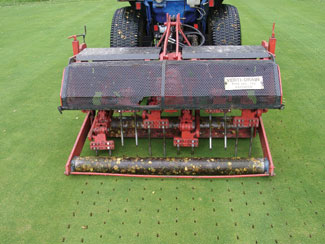
As a superintendent the quickest and easiest option might be to invest in a trailer attachment or to rent a power aerator at a local rental store.
Turf aeration is the process of making holes in the lawn (3-4’’ deep) either by spikes or ?EUR??,,????'??coring?EUR??,,????'?? with a spoon-like cylinder that extracts plugs of soil. The aim of aerating is to create more room for air movement in the soil. This relieves soil compaction, helps control thatch in lawns and helps water and fertilizer move deeper into the root zone.
Aeration can be especially beneficial to turf when it is a high traffic area with soil compaction or when it has a layer of thatch thicker than 1/2’’. Signs of soil compaction include foot-worn areas, rapid browning in dry weather and slow rainwater drainage.
Why Aerate?
Aeration improves the turf?EUR??,,????'???s ability to receive the three elements needed for survival – water, nutrients, and air. Grass plants are stimulated to produce new shoots and roots which will then fill up the holes in the lawn and increase the density of the turf. Aeration also increases the turf?EUR??,,????'???s drought tolerance and improves its overall health. It helps decompose thatch and reduces compaction on the surface of the soil which can help stop leakage of fertilizer and pesticides.
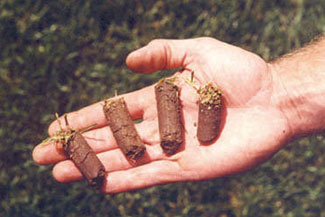
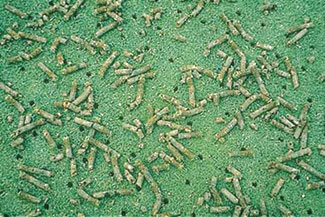
Core aeration physically removes plugs of soil about 3-4’’ long and 1’’ in diameter. The plugs can be left on the turf and will usually work themselves back into the soil after one mowing.
Equipment
There are two basic types of lawn aeration equipment that can be used for the job. You can use either a power or manual aerator. Manual aerators work quite well, but can be labor intensive over large areas. As a superintendent the quickest and easiest option might be to rent a power aerator at a local rental store or invest in a trailer attachment.
There are also spiked aerators and core aerators. Spiked aerators go by their name; they simply spike the ground. This can work if the soil compaction is relatively low. If the soil is highly compacted, a core aerator might be necessary, which physically removes plugs from the soil.
Spiked Aeration
Spike aeration is most effective when compaction and thatch is minimal. While spiked aeration may not be the best bet when there is heavy compaction, spiked aeration can produce beneficial results under the right circumstances.
Spiked aerators come in many shapes and sizes, from shoes with spikes and to power equipment to tractor attachments.
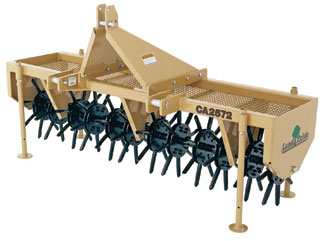
Trailer attachments such as this one, manufactured by Land Pride, could be a great investment for superintendents.
Core Aeration
Core aeration is a process of physically removing cores of soil and leaving holes or cavities in the lawn. In many cases a core aerator is often the preferred tool to use for turf aeration because aeration is most effective when actual cores or plugs of soil are pulled from the turf. This provides a direct open link between the surface air and the soil below. However, for large spaces such as athletic turf and golf courses, this method is not always possible. In those cases, spiked aeration may be the best choice.
When to Aerate
Turf can be aerated at any time when the ground is not frozen, but should not be done when it is extremely hot and dry. The best time to aerate is during the peak growth time of the turf. This is usually late spring for warm season grasses and early fall for cool season grasses. Heavy traffic areas will require aeration more frequently. Aerating one time per year should be sufficient for most types of turf. However, if there is an area that has heavy traffic or clay soil, then aerating twice a year might be helpful.
The turf should be moist but not wet. This will help soften the soil and allow for better penetration by the aerator, thereby providing better results. If necessary, water the area 1-2 days prior to aeration.
You should wait a year before aerating a newly seeded or sodded lawn.
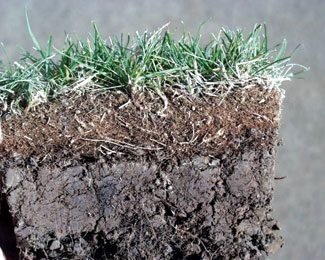
Thatch can become a water resistant barrier on the soil surface that keeps the roots of grass from reaching the soil because of lack of water. Turf rooted in thatch build-up is more vulnerable to temperature and weather and requires deeper, more invasive aeration.
Tips:


