Auburn University
Partners In Design

Auburn University, located in the historic city of Auburn, Alabama, is often referred to as "the Loveliest Village on the Plains." The university was founded in 1856 and has grown to encompass more than 1,800 acres as a popular school in the Southeastern Conference, with more than 34,000 students. The campus is known for its historic beauty, expansive grounds, and vibrant community. Featuring red-brick architecture, lush landscapes, modern academic facilities, and extensive student life the campus creates a unique "Auburn Spirit" in a friendly university setting. HNP Landscape Architecture has played a significant role in creating many of the sustainable landscape architecture designs on campus for more than twenty years, completing over 80 projects to date for the university.
National Pan-Hellenic Council Legacy Plaza
In 2018, Auburn University's Student Government Association and the National Pan-Hellenic Council (NPHC) led a joint initiative to establish a monument honoring the history, legacy, and cultural impact of Black Greek organizations on campus. Prominently situated along one of the university's main corridors, the Legacy Plaza's nine markers represent the historically African American sororities and fraternities, also known as the Divine Nine. The granite pillars are engraved with each organization's crest and Greek letters, along with chapter names for the eight organizations that were established at Auburn.
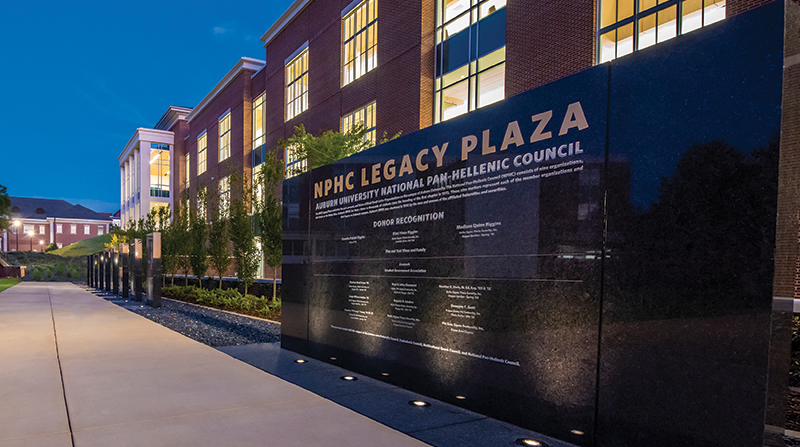
A large donor marker sits aside nine black granite markers representing each of the "Divine Nine" historically Black Greek organizations, eight of which have chapters established at Auburn University. The markers are uplit with walkover established luminaries and framed by European Hornbeam (Carpinus betulus 'Fastigiata') flowering trees and Sasanqua Camellias (Camellia sasanqua). PHOTO CREDIT: AUBURN UNIVERSITY
The crests and lettering were engraved in black granite, mirroring the existing campus memorial wall at the Garden of Memory. Acquiring sufficiently large granite slabs to meet the design specifications proved to be a challenge, as nine 6-foot pillars were needed in addition to a larger, more prominent piece recognizing donors and highlighting the purpose of Legacy Plaza. Many of the solid granite candidates were marred by fissures, so three pieces were ultimately combined to provide the scale and impact desired for the donor marker. The Plaza and markers were dedicated at an event in September of 2022.
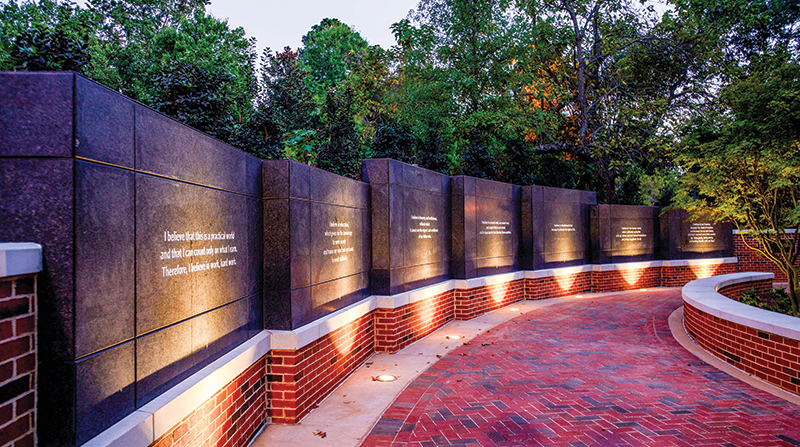
Built to accommodate current and future requests for on-campus memorial projects, the Memorial Wall at Auburn's Garden of Memory is a concrete wall veneered with granite and 1,000 square feet of brick, all lit from below by 105-watt LED in-grade luminaires. The garden features many shade trees, like Nutall Oaks (Quercus nuttallii) and Star Magnolias (Magnolia stellata).
Garden of Memory
The Auburn University Garden of Memory is a 4.2-acre garden dedicated to the memory of students, faculty, administration, and fallen military graduates. It was a joint project between the Auburn Student Government Association (SGA), who wanted a place of remembrance to honor members of the Auburn Family who pass away each year, and Auburn University Facilities, who sought a way to limit the growing number of requests for memorial plaques, benches, medallions and other objects.
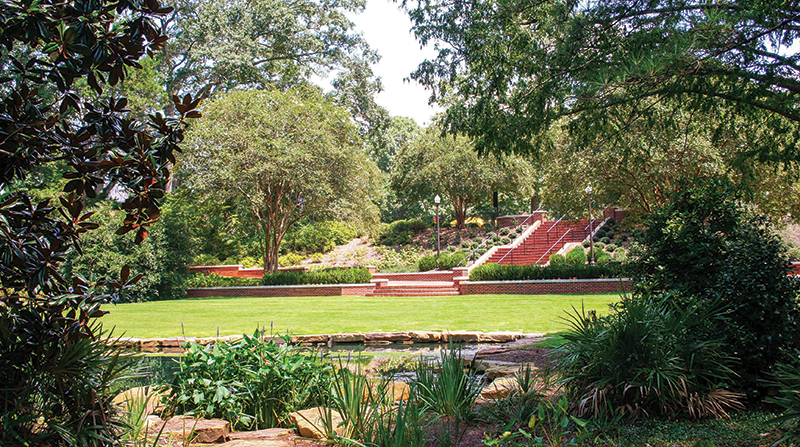
Surrounded by lush plantings and anchored by a reflective pool and an Emerald Zoysia Sod lawn (Zoysia 'Emerald'), the garden offers a calm refuge ?EUR" an enduring setting for pause, reflection, and remembrance. Standout plantings include Snowflake Oakleaf Hydrangeas (Hydrangea quercifolia 'Snowflake') and Pride of Mobile Azaleas (Rhododendron indica 'Pride of Mobile') as well as aquatic varieties like the Louisiana Iris (Iris hexagonas) and Pickerelweed (Pontederia cordata). The garden features 3,650 square feet of brick pavers.
The Garden of Memory project reimagined one of campus's most cherished landscapes through a series of thoughtful enhancements that strengthen both beauty and function. New walkways, seating walls, garden elements, and a granite and brick veneered concrete memorial wall leads visitors through the space, creating a more accessible and inviting environment while preserving the garden's quiet character. Other improvements - like stream-side enhancements, wetland plantings, and subtle in-stream features - were introduced to improve water quality and reinforce the health of the surrounding ecosystem, aligning the project with broader sustainability goals.
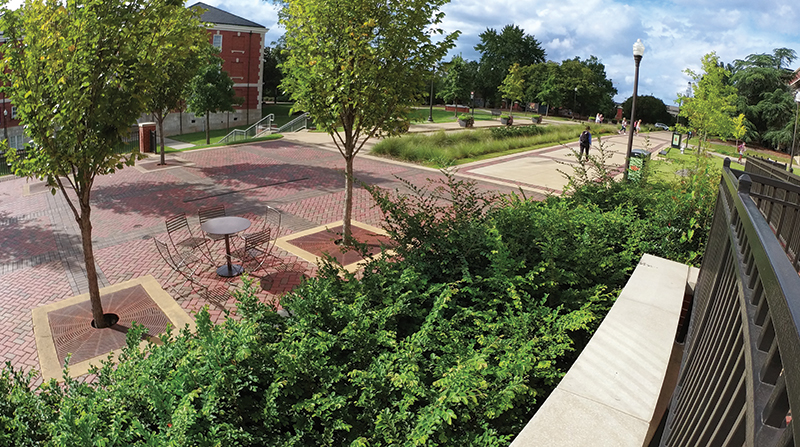
The Board of Directors has made it a priority in campus planning to convert vehicular thoroughfares to pedestrian-friendly walkways. One example is Mell Street Corridor, which features over 18,000 square feet of bricks lined with seating areas shaded by Princeton Elm (Ulmus americana 'Princeton'), Water Hickory (Carya aquatica), and Little Gem Magnolia (Magnolia grandiflora 'Little Gem').
This project is a very visible example of a successful design with multiple goals, and represents a rare student-led, student-financed building initiative on the Auburn campus. Completed in late 2016, the Garden of Memory remains one of the campus's most recognizable and meaningful places.
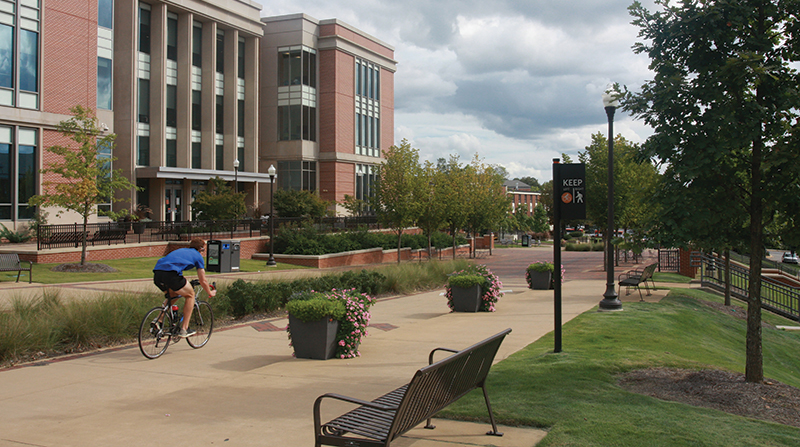
Themed benches and waste receptacles are found throughout the campus. The campus is also illuminated by fluted steel poles with acorn light fixtures. Planted areas along the middle contain Pink Mulhy Grass (Muhlenbergia capillaris) and Dwarf Mondo Grass (Ophiopogon japonicus 'Nana') as well as Crimson Fire Loropetalum (Loropetalum chinense var. rubrum 'PIILC-I').
Campus Pedways along Mell St Corridor
The pedestrianization of Thach Pedway, Roosevelt Pedway, Mell Street Classroom and Corridor, as well as the Tiger Carroll Ginn Concourse was a result of Auburn's Board of Trustees' vision to remove automobiles from the campus core. With a master plan that converted existing streets to pedestrian concourses, HNP provided designs featuring inviting site furnishings, ambient lighting, and rich landscaping. The project was completed in five phases over a seven-year period.
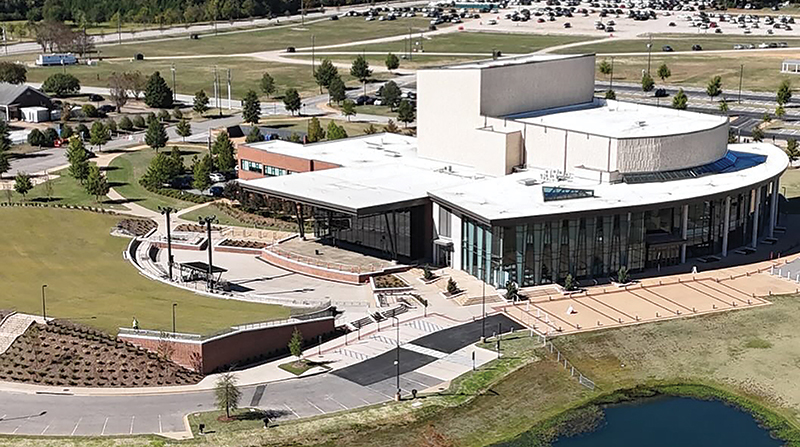
HNP was responsible for the landscape and hardscape design. The design includes 25,677 square feet of colored concrete sidewalk and 1,527 square feet of steps and ramps, as well as retaining and planter walls. PHOTO CREDIT: RABREN GENERAL CONTRACTORS
Gogue Performing Arts Center
The Jay and Susie Gogue Performing Arts Center was a joint effort between Auburn University and the City of Auburn to bring world class theatrical and musical performances to the Auburn area. It now serves as the southern gateway to the University and creates a fine arts district adjacent to the Jule Collins Smith Museum of Fine Arts. The 11-acre site features an extensive walkway system, connecting the building with several parking areas. Highlights of the greenspace include an amphitheater, a lake to capture rainwater, and a supplemental well that aides in site irrigation. In the fall of 2025, Auburn University completed Phase 2 with the addition of the Bill and Carol Ham Amphitheater at the Gogue Performing Arts Center, creating a venue for 3,000 patrons to enjoy outdoor performances.
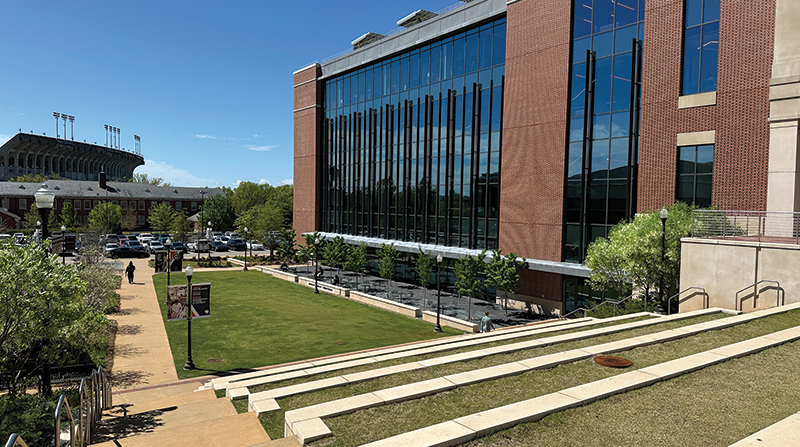
A grade difference of 19 feet immediately next to the Harbert Graduate Business Building was handled with terraced steps that range from 1 to 7 feet tall, covered with Emerald Zoysia sod (Zoysia 'Emerald') that is used throughout campus. A walkway made of 3,680 square feet of bricks surrounds the lawn, further encompassed by a variety of Oak Trees (Quercus lyrata 'Highbeam'; Quercus nuttallii 'Icon'; and Quercus phellos 'Hightower'), in addition to a few Black Tupelos (Nyssa sylvatica 'Wild Fire').
Graduate Business Building
At the new Graduate Business Building, the amphitheater and green space has had a tremendous appeal on a sunny day, where students can be seen at moveable table sets between the two business buildings. HNP assisted with site design for the new Graduate Business building and the adjacent Lowder Building to create a network of interconnected walkways between the two facilities and integrated special event space.
Rane Culinary Science Center
The Rane Culinary Science Center houses multiple programs within the College of Human Sciences, combining instructional spaces with a boutique hotel and culinary-focused dining destinations that reinforce the connection between education and real-world application. The compact urban site is organized to maximize outdoor experiences, offering a series of inviting spaces for dining, gathering, and events that extend the building's function into the landscape and enhance campus life. A signature feature is the rooftop garden that supplies fresh ingredients for on-site food venues and provides a visually engaging setting overlooking campus while ground-level outdoor spaces support student activities and special events.
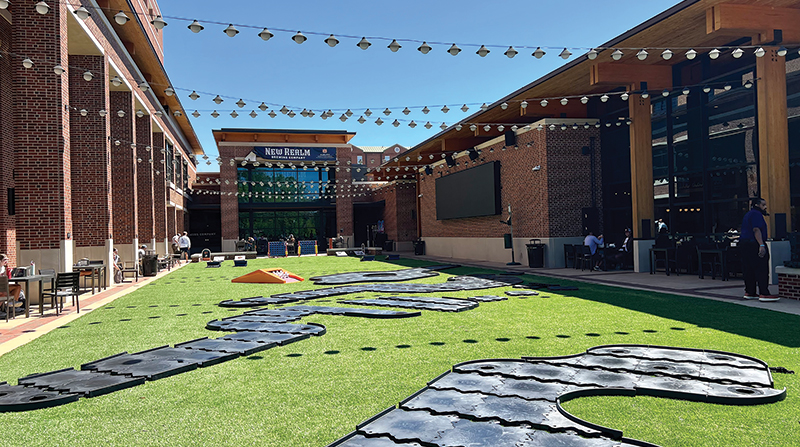
The Rane Culinary Science Center integrates academic programs with revenue-generating uses, creating a dynamic environment that supports both learning and hospitality. The courtyard features aluminum waste receptacles, benches, and outdoor dining tables, all with a bronze finish arranged on permeable brick pavers around a central event lawn.
At street level, the landscape is designed as a seamless extension of the campus fabric, framing key frontages and welcoming visitors to the facility. Layered plantings of evergreen shrubs establish a strong foundation, while larger accent and screening shrubs add depth and privacy. Small flowering trees introduce seasonal interest, and large shade trees anchor the space, creating comfortable, walkable outdoor areas, set within fully sodded lawns. This facility, the first of its kind for Auburn University, blends a unique learning environment with a luxury boutique hotel and culinary teaching restaurant.
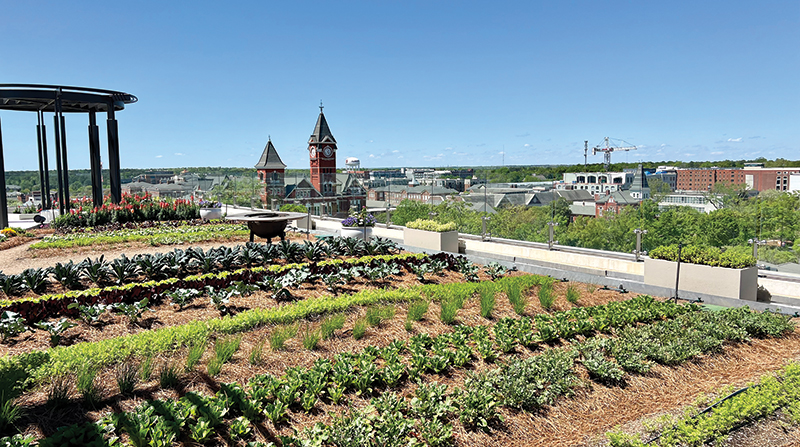
With a view of the campus, the rooftop garden is supported by a plastic structural cellular planting system. In addition to edible herbs and vegetables supported by a green roof planting system, the garden features planters of colorful annuals.
In It For The Long Run
It has been an honor for HNP to be an integral part of the landscape architecture projects on Auburn's campus for many years. Their collaboration with the university has allowed them to not only contribute to the beauty and functionality of the campus, but also promote environmental stewardship and sustainability. Together with Auburn University, the team looks forward to new projects that will further enhance the campus experience, while advancing shared goals of sustainability, beauty, and environmental responsibility.
As seen in LASN magazine, June 2026.


