Azul Oasis
Crafting A Waterfront Sanctuary

Set along an intracoastal waterway in Jupiter, Florida, Azul Oasis is a carefully composed landscape that balances contemporary design, coastal resilience, and multigenerational living. Conceived as a personal retreat for the matriarch of a large, close-knit family, the project demonstrates how landscape architecture can mediate between architecture, environment, and lifestyle - transforming a private residence into a cohesive, experiential landscape. Designed by Insite Studio - a Florida-based consulting firm specializing in land planning, landscape architecture, and urban design led by principals Brian Terry, PLA, and Bryan Donahue, PLA - along with Affiniti Architects and Decorators Unlimited, Azul Oasis reflects a holistic approach in which the landscape is neither ornamental nor supplemental, but integral to how the home functions and is perceived. The exterior spaces were intentionally designed to blur the boundary between interior and exterior, creating a sequence of environments that support wellness, recreation, contemplation, and gathering - while remaining responsive to South Florida's unique coastal conditions.
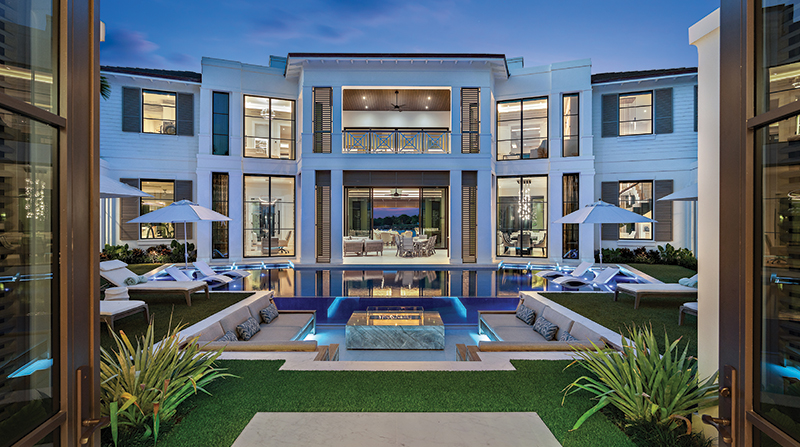
The central courtyard was designed to be inward-focused and protected while extending the living environment outdoors, reinforcing the project's emphasis on indoor/outdoor continuity. The residence's foyer leads to a raised area of artificial turf, accented by 2'x 4' steppingstones that leads to a modern, sunken firepit with lounging options. Behind this area is a 20'x55', resort-style pool with an adjoining lanai, or open-sided porch, that stretches out from the interior dining room.
Arrival and First Impressions
At the front entry, the design establishes a sense of order, balance, and refinement. Responding to the home's modern Mediterranean architectural aesthetic, the entry drive is organized symmetrically, reinforcing axial views while softening the scale of the residence through material and planting choices. A tabby shell aggregate driveway, interwoven with turf bands and edged in river rock, introduces texture and permeability while grounding the architecture in its coastal environment. The planting palette is tropical yet composed - flowering Jacaranda Trees (Jacaranda mimosifolia) provide seasonal color and canopy, while ornamental shrubs and accent plantings offer variation in texture and form. Date Palms (Phoenix dactylifera) and King Alexander Palms (Archontophoenix alexandrae) frame the residence, creating a formal yet welcoming entrance.
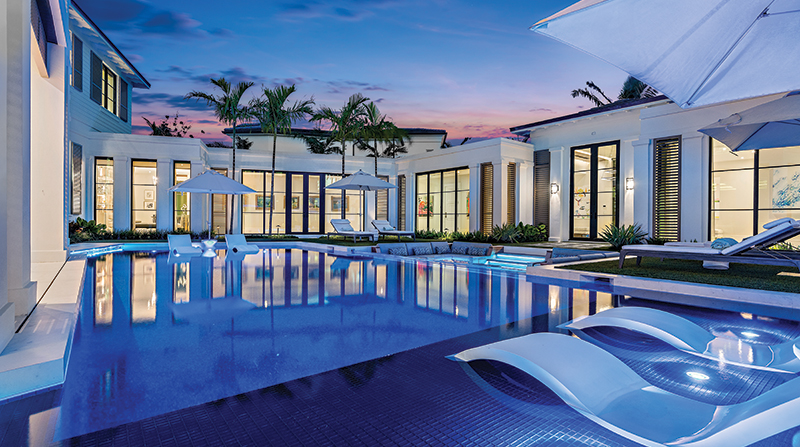
The pool was designed by the Landscape Architect and Almar Jackson Pools to mirror the reflective depths of Florida's rivers and lakes. It features 48"x12" porcelain pavers for the coping. All outdoor furniture was specified by the project's interior designer, Decorators Unlimited.
The Heart of the Home
The central courtyard was designed as the landscape's primary organizing element. This space functions simultaneously as a private retreat and a connective hub, visible from multiple interior rooms - including the entry foyer, study, and guest hallway - while expanding the living environment outdoors, reinforcing indoor/outdoor continuity. The courtyard extends the dining experience from the interior dining room to a poolside lanai, links the exercise room directly to a yoga lawn, and connects the interior sauna with an outdoor spa and Zen garden. These adjacent spaces are unified through consistent materials, a restrained palette, and a layout that emphasizes symmetry and clarity. The pool serves as the courtyard's focal feature. It was finished with a dark interior surface to reference the reflective qualities of Florida's natural rivers and lakes. Positioned close to the building foundation to optimize solar exposure, the pool incorporates bubblers, cascading water features, and floating steppingstones that animate the space visually and acoustically. Island planters introduce palms and tropical plantings, reinforcing the sense of a secluded oasis.
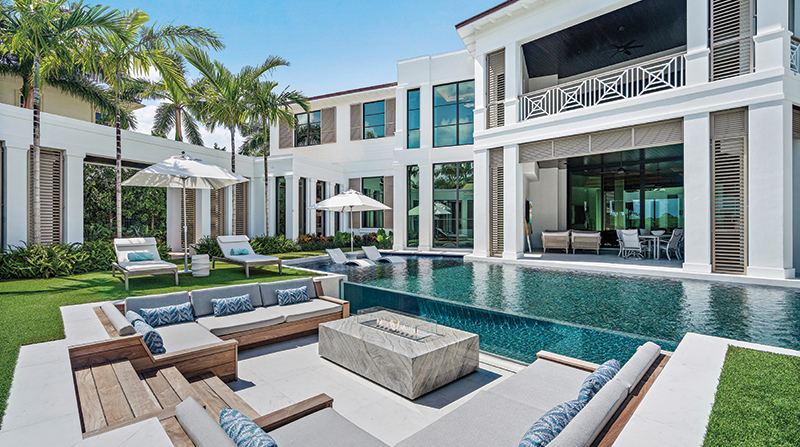
The sunken lounge features matte-finished porcelain pavers as well as a custom-built fire pit covered with porcelain slabs that resemble marble and equipped with a 38"-long, tree-style CROSSFIRE® brass burner from Warming Trends. A 4"-thick acrylic panel functions as a portion of the pool wall.
Water, Movement, and Sensory Experience
At the breezeway, a wood-finished walkway bisects an oversized spa and cascading fountain finished in natural pebble stone, creating the impression of a continuous waterbody beneath the walkway and blurring the distinction between ornamental and functional water features. This transitional space heightens the sensory experience of movement through the landscape. The sound of running water, the tactile contrast of wood and stone, and the shifting perspectives across water surfaces transform circulation into an experiential sequence rather than a purely functional path.
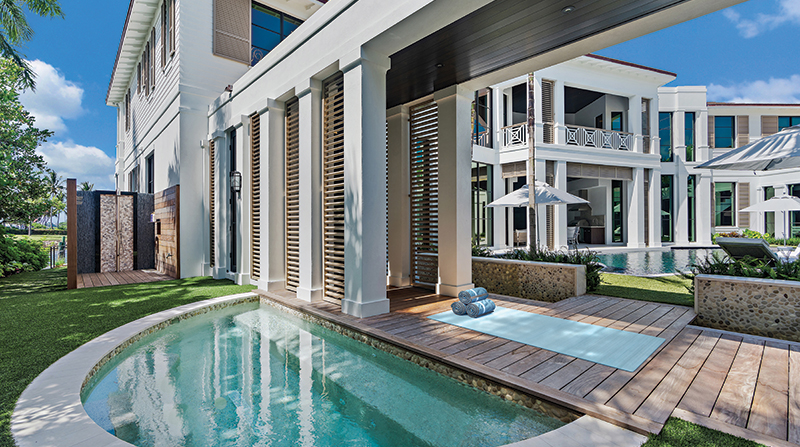
Across the breezeway from the courtyard is a wellness retreat - complete with an indoor gym and sauna, an outdoor spa and Zen garden, and a yoga lawn protected by surrounding architecture and benefiting from a shaded, tropical microclimate.
A Space for Wellness
Adjacent to the spa, the Zen garden and yoga lawn establish a dedicated wellness zone. Surrounding architecture provides this area a shaded, tropical microclimate with limited wind and salt exposure. Bamboo plantings (Bambusa textilis 'Gracilis' and Bambusa vulgaris 'Wamin') create a layered green enclosure, while fragrant flowering vines climb adjacent walls, softening architectural edges and engaging the senses. A sculptural outdoor shower, clad in natural stone veneer and accent lighting, anchors the space as both a functional amenity and a design feature. Nearby, a sunken firepit provides an intimate gathering area that contrasts with the cool, reflective qualities of the water. Finished in book-matched porcelain tile reminiscent of monolithic marble, the fire feature is separated from the pool by an acrylic wall that lets illuminated water glow into the space at night.
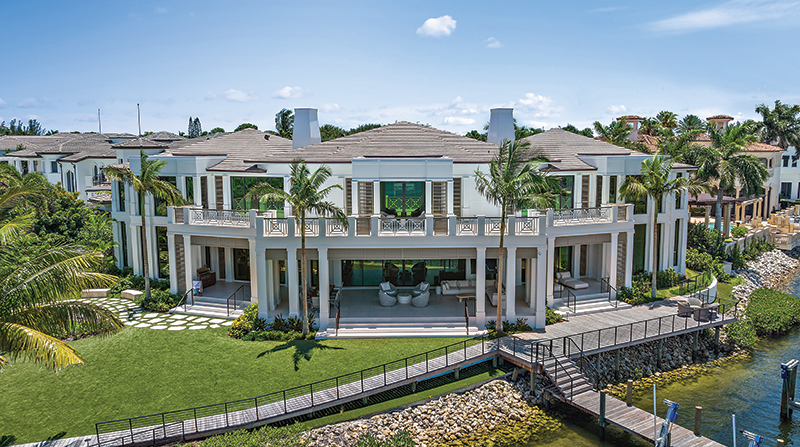
An expansive covered patio accommodates (from left to right) cooking, dining, and lounging, with each zone aligned to adjacent interior spaces. King Alexander Palms (Archontophoenix alexandrae) frame the rear of the residence. The deck, raised walkway, and dock area were specified to be surfaced with thermally modified wood, but the owner - along with the Turtle Beach Contractors, the project's general contractor - decided on standard lumber for these and all site elements made of wood. Railings were custom fabricated with black aluminum by a subcontractor.
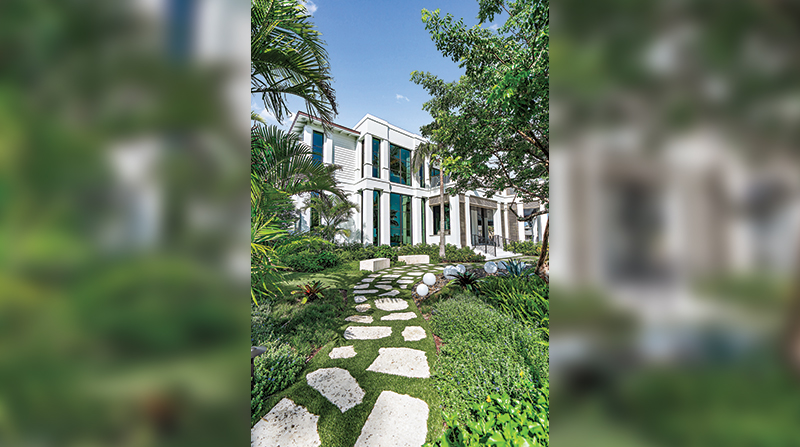
A pathway of honed, irregular-shaped, coral flagstone leads through a garden with native and drought-tolerant plants, coastal shrubs, textured grasses, and a bed of river rock with sculptural light spheres. The garden's focal point is a mature Gumbo Limbo Tree (Bursera simaruba), selected for its expressive form and architectural branching.
Expanding to the Waterfront
The rear yard opens fully to the intracoastal waterway, so the design responds to increased sun exposure, salt air, and prevailing winds through material selection and plant palette. An expansive covered patio accommodates cooking, dining, and lounging, with each zone aligned to adjacent interior spaces. Elevated above an open lawn, the patio provides panoramic views toward the water. A lower deck lounge connects to boat docks and a boardwalk that borders the property's waterfront edge - serving as both circulation and an ecological threshold while marking the transition from cultivated landscape to shoreline habitat. Native and salt-tolerant coastal plantings underline resilience while visually integrating the site with its natural surroundings.
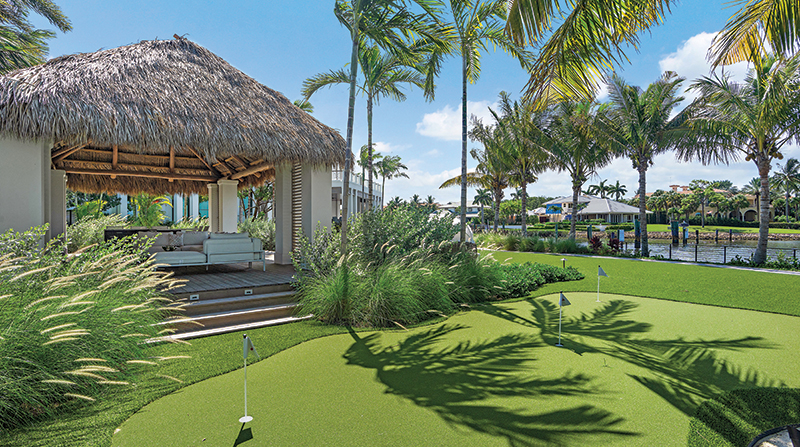
This outdoor pavilion was intended to evoke a "Chickee"?EUR" the Seminole Indian word for 'house' that customarily refers to an elevated structure with open sides and a palmetto thatch roof over a cypress log frame. Except for the traditional thatch roof, the pavilion was constructed with more modern materials specified by the architect to match the house. Ten mature Foxtail Palms (Wodyetia bifurcata) were relocated to the site to screen neighboring properties and serve as a backdrop for the pavilion and synthetic turf putting green.
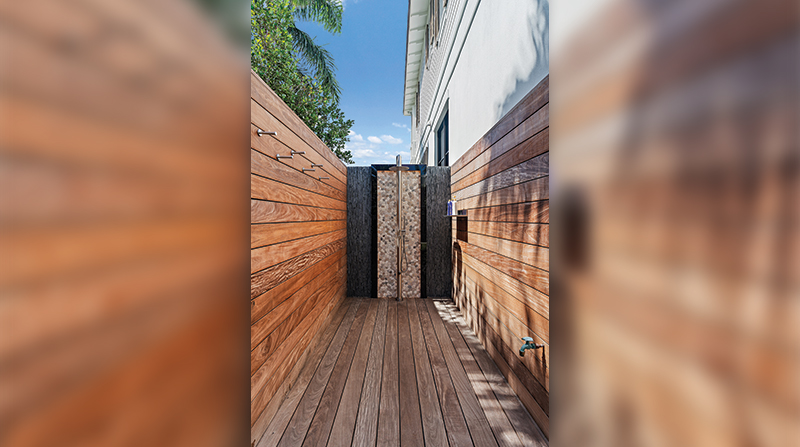
A sculptural outdoor shower designed by Insite Studio includes fixtures selected by the owner. The back wall is clad with honed, 'Malu Gray' level pebble tile with a black banding of glossy, 'Marble Marquinia" porcelain veneer flanked by honed, 'Crescent Dimensional' silver quartzite tile.
The Coastal Sculpture Garden
A coral stone and turf pathway guides visitors past flowering beds of hardy coastal shrubs and textured grasses, wrapping around a river rock garden illuminated by sculptural light spheres. Split-faced monolithic benches provide seating and visual weight along the path. Designed to accommodate art installations, the garden functions as both circulation and a gallery. This space is also experienced visually from the interior breakfast room, reinforcing the constant dialogue between indoor and outdoor spaces. The garden's focal point is a mature Gumbo Limbo Tree (Bursera simaruba), selected for its expressive form and architectural branching. One branch is being trained to grow horizontally, creating a natural seating element beneath the canopy that demonstrates the emphasis on interaction between landscape and user.
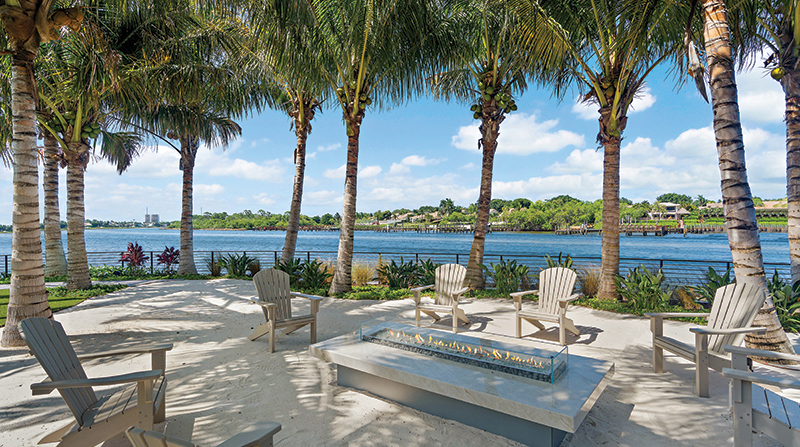
At the far edge of the property, a lounge area with a fire pit provided by the homeowner was installed on crushed coquina sand beneath a grove of Coconut Palms (Cocos nucifera). Behind the fire pit is an area planted with Seashore Paspalum (Paspalum vaginatum).
Spaces for Play and Gathering
The open lawn provides a flexible area for active and passive use, anchored by a 'Chickee' pavilion that is elevated to capture views and breezes from the intracoastal waterway. The pavilion reinterprets Indigenous Seminole building traditions - such as using cypress logs and palmetto thatch - through a contemporary design lens. Located within the intracoastal right-of-way easement, the Chickee pavilion was designed as a 'breakaway structure' to meet U.S. Army Corps of Engineers requirements. It functions as a fully realized outdoor lounge and bar, seamlessly connected to a game lawn featuring a putting green and chipping areas. At the far edge of the property, a beach firepit lounge sits on crushed coquina sand beneath a grove of Coconut Palms (Cocos nucifera) offering a quiet counterpoint to the more active areas.
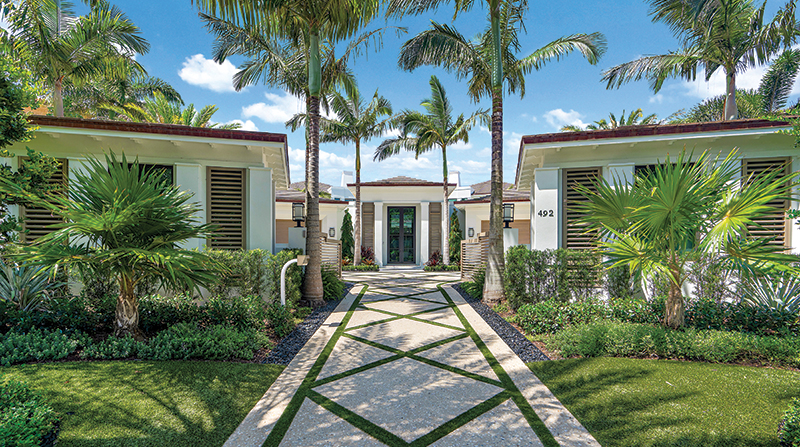
A symmetrically organized entry drive made of tabby shell aggregate - a type of concrete that incorporates burnt and broken oyster shells - crisscrossed with bands of artificial turf and edged with river rock was designed to reflect the residence's Mediterranean influence. The drive is flanked in the foreground by Thatch Palms (Thrinax radiata) and in the background by King Alexander Palms.
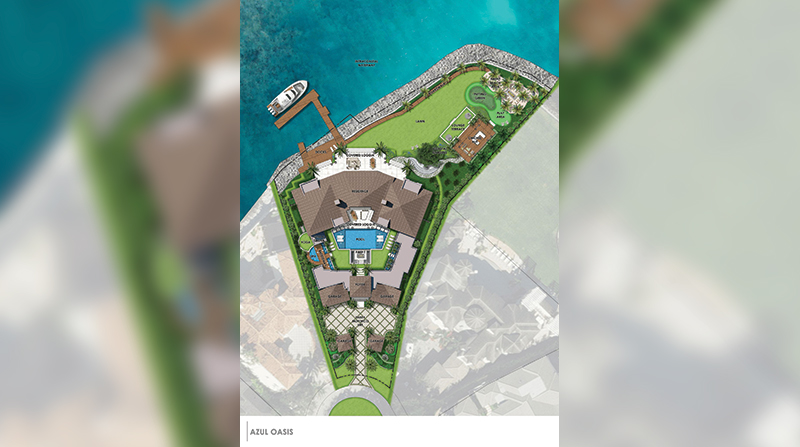
The rear yard unfolds into an expansive lawn accommodating the Chickee pavilion - inspired by seminole architecture with cypress logs and attached roof - next to the putting green and play area to the east with views of the intercoastal waterway. Due to its location within an intracoastal right-of-way easement, the pavilion was designed as a 'breakaway structure' to meet U.S. Army Corps of Engineers requirements. Approximately 6,500 sf of artificial turf was installed project wide. The design sought to minimize hardscape surfaces and prioritize pervious materials to enhance stormwater management.
Environmental Responsiveness
Environmental considerations were integral to the design. Hardscape areas were minimized in favor of pervious surfaces to support stormwater management and enhance the client's desired 'barefoot' character. Plant palettes were tailored to distinct microclimates across the site: ornamental tropical species in shaded courtyards, bamboo in private wellness areas, and native coastal species in sun and salt exposed zones. Privacy buffers were carefully calibrated to screen neighboring properties while preserving views to the water.
A Cohesive Landscape for Generations
Through careful planning, material selection, and collaboration, a series of interlinked environments that support wellness, recreation, and family connection while respecting the coastal setting demonstrates how landscape architecture can unify architecture, ecology, and daily life. Azul Oasis represents a commitment to thoughtful, hands-on design and the creation of landscapes that endure - places shaped not only by form and function, but by the families and lives lived within them.
As seen in LASN magazine, April 2026.


